Have you noticed a foul sewage smell in your bathroom? Alternatively, do you hear loud gurgling from your washbasin when you flush the toilet? Choosing between an air admittance valve vs open vent pipe system is the most effective way to solve drainage noise and odors permanently.
Every home drainage network needs constant airflow to function properly. As waste water rushes down a pipe, it creates a strong suction vacuum. Without adequate air intake, this vacuum pulls water straight out of your sink traps. Consequently, foul sewer gas enters your living space.
Understanding how an air admittance valve vs open vent pipe layout works helps you protect your home’s hygiene and air quality.
Comparing an Air Admittance Valve vs Open Vent Pipe Setup
1. Traditional Open Vent Pipe Systems
Historically, plumbers extended soil stacks straight through the roofline. Therefore, the pipe terminates high above the house in open air.
The Pros: This open pipe provides two-way airflow naturally. Consequently, it breaks vacuums quickly and releases sewer gas safely outside.
The Cons: However, roof penetrations create persistent leak risks. Furthermore, birds often nest inside the exposed top pipe. If your external stack is aging or leaking, explore our guide on replacing cast iron soil pipes with uPVC.
2. Modern Air Admittance Valve (Durgo Valve) Systems
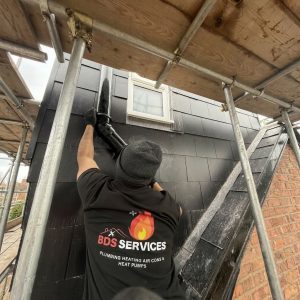
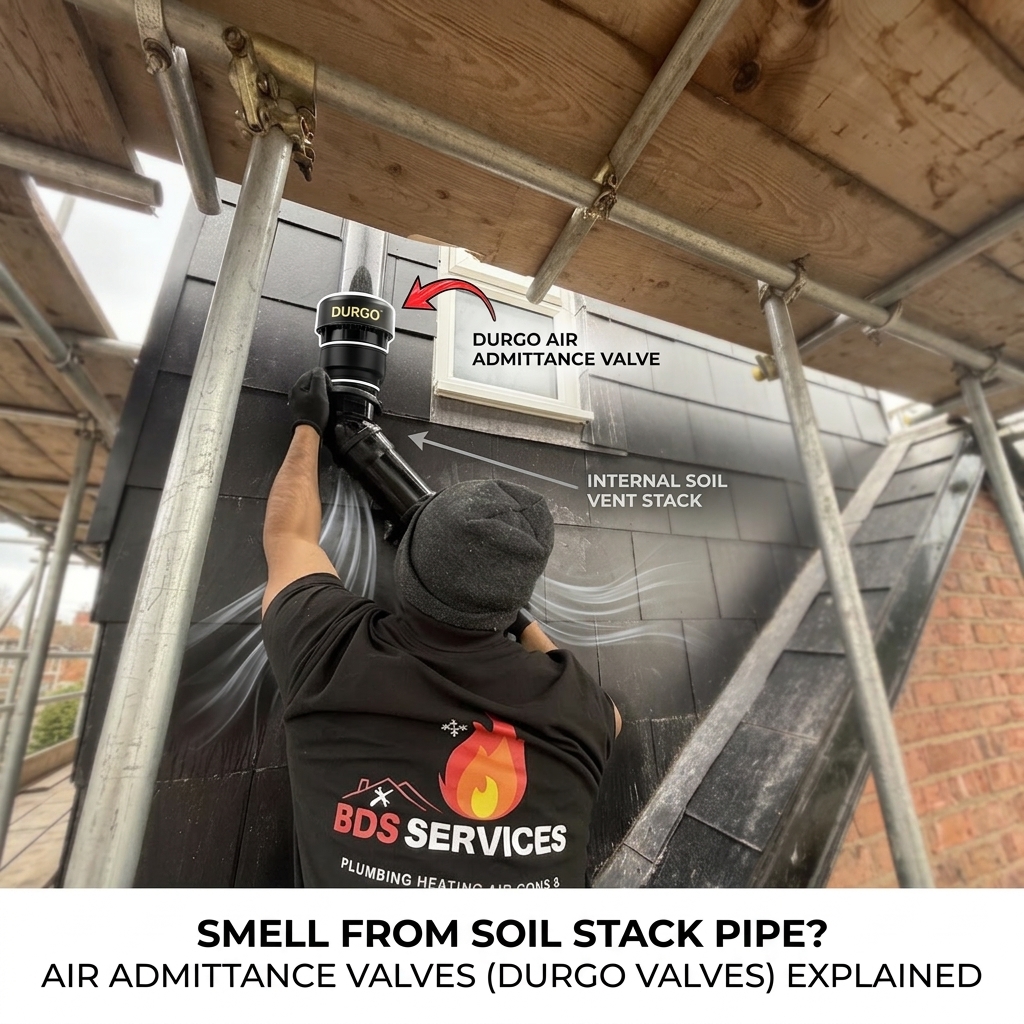
An Air Admittance Valve (AAV) is a clever one-way mechanical valve. Plumbers fit this unit directly on top of an internal soil pipe inside the building.
Toilet Flushes → Vacuum Formed → Valve Diaphragm Opens → Air Enters Pipe → Vacuum Clears → Valve Closes
One-Way Operation: Gravity holds the internal rubber diaphragm shut under normal conditions. Thus, smelly gases stay trapped inside your pipework. When a toilet flush creates suction, the valve opens instantly. As a result, fresh room air enters the pipe and restores balanced pressure.
No Roof Holes: Consequently, engineers can install AAVs internally inside bathroom boxing or loft spaces. If you are reconfiguring your suite, check our advice on rerouting soil pipes for a new bathroom layout.
Installation Rules for an Air Admittance Valve vs Open Vent Pipe
You must follow strict guidelines under UK Building Regulations Document H when choosing an air admittance valve vs open vent pipe setup:
Placement Height Rules
Specifically, you must install the valve at least 100mm higher than the highest water outlet on the connected sinks or baths.
Air Supply Requirements
Furthermore, never box an AAV into an airtight void. The valve needs a steady supply of room air via a decorative louvered grille.
Main Sewer Venting Rules
However, a drainage system cannot rely exclusively on AAVs. Therefore, your property layout must retain at least one open vent stack to manage main public sewer pressure.
Diagnosing Faulty Durgo Valves and Drain Odors
Over time, internal rubber seals degrade due to grease and debris. As a result, a worn Durgo valve leaks foul sewer gas back into your home.
If your sinks gurgle or your bathroom smells bad, BDS Services Ltd can help. Our experienced team can quickly test your waste pipes, clear blockages, and replace worn valves. Call our West Midlands plumbers on 07429776336, book online via our plumbing services page, or reach out directly through our local Birmingham plumber team.