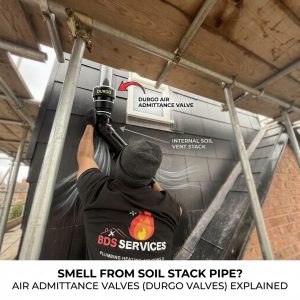
Cast iron soil stack pipes were the gold standard for UK drainage systems throughout the 19th and mid-20th centuries. While exceptionally durable, age, constant exposure to wastewater, and external weathering eventually take their toll. Cast iron scales internally, snags debris, and rusts from the inside out—often causing hairline cracks, persistent dampness, or foul drainage leaks along your property’s exterior walls.
Upgrading to a modern 110mm uPVC soil stack system restores full hydraulic flow, eliminates rust, and reduces future maintenance. However, replacing cast iron soil pipes with uPVC involves heavy structural loads and precise technical execution.
Technical Challenges of Cast Iron Removal
1. Structural Weight and Anchoring
Cast iron is extremely heavy. A full 3-story external cast iron stack can weigh hundreds of kilograms. Plastic uPVC pipe, by contrast, is flexible and lightweight.
The Risk: If you cut into a cast iron stack without supporting the weight above it, the remaining upper section will collapse downward under gravity, shattering roof slates or causing severe injury.
The Solution: Professional plumbers install heavy-duty steel pipe clamps and structural wall brackets above and below every planned cut point before making a single incision.
Step-by-Step Installation Process
Step 1: Safe Sectional Cutting
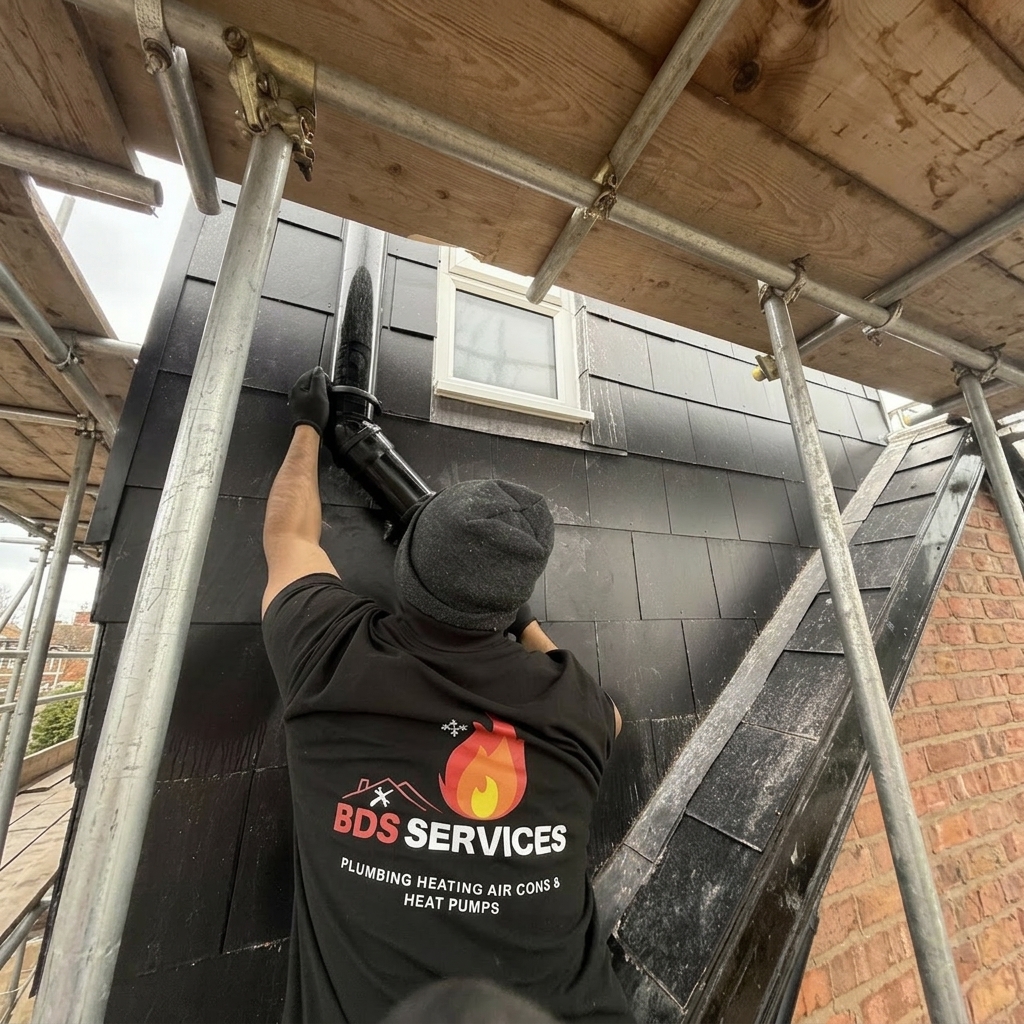
Using angle grinders or specialized hydraulic snap-cutters, engineers remove the degraded cast iron section by section. Working at height requires secure scaffold towers or MEWP access to handle the heavy metal safely.
Step 2: Selecting the Correct Transition Couplings
Connecting new 110mm uPVC pipe to surviving cast iron or underground clay drainage requires specialized fittings. Standard push-fit connectors will not form an airtight or watertight seal due to differences in outside pipe diameters.
| Joint Type | Application | Key Specification |
| Flexible Elastomeric Couplings | Cast Iron to uPVC | Stainless steel shear bands with EPDM rubber sleeves |
| Adaptor Bush Connectors | Spigot to Socket Joints | Solvent-weld or push-fit chemical-resistant seals |
Step 3: Setting Thermal Expansion and Gradient
Plastic pipes expand and contract with temperature fluctuations from hot washing machines and bath discharges.
Expansion Gaps: Every push-fit socket on a uPVC stack must be pulled back 10mm after full insertion to allow for thermal movement.
Support Spacing: Vertical 110mm uPVC pipework requires pipe clips anchored to the masonry wall at maximum 2.0-meter intervals to prevent bowing.
Professional Soil Stack Upgrades in the West Midlands
Replacing a cast iron soil stack requires expert structural anchoring, precise pipe sizing, and full compliance with UK Building Regulations Part H (Drainage and Waste Disposal).
BDS Services Ltd delivers fast, fully compliant drainage and pipework upgrades across Birmingham and the West Midlands. Call our team today on 07429776336 or book a site visit online via our plumbing services page.