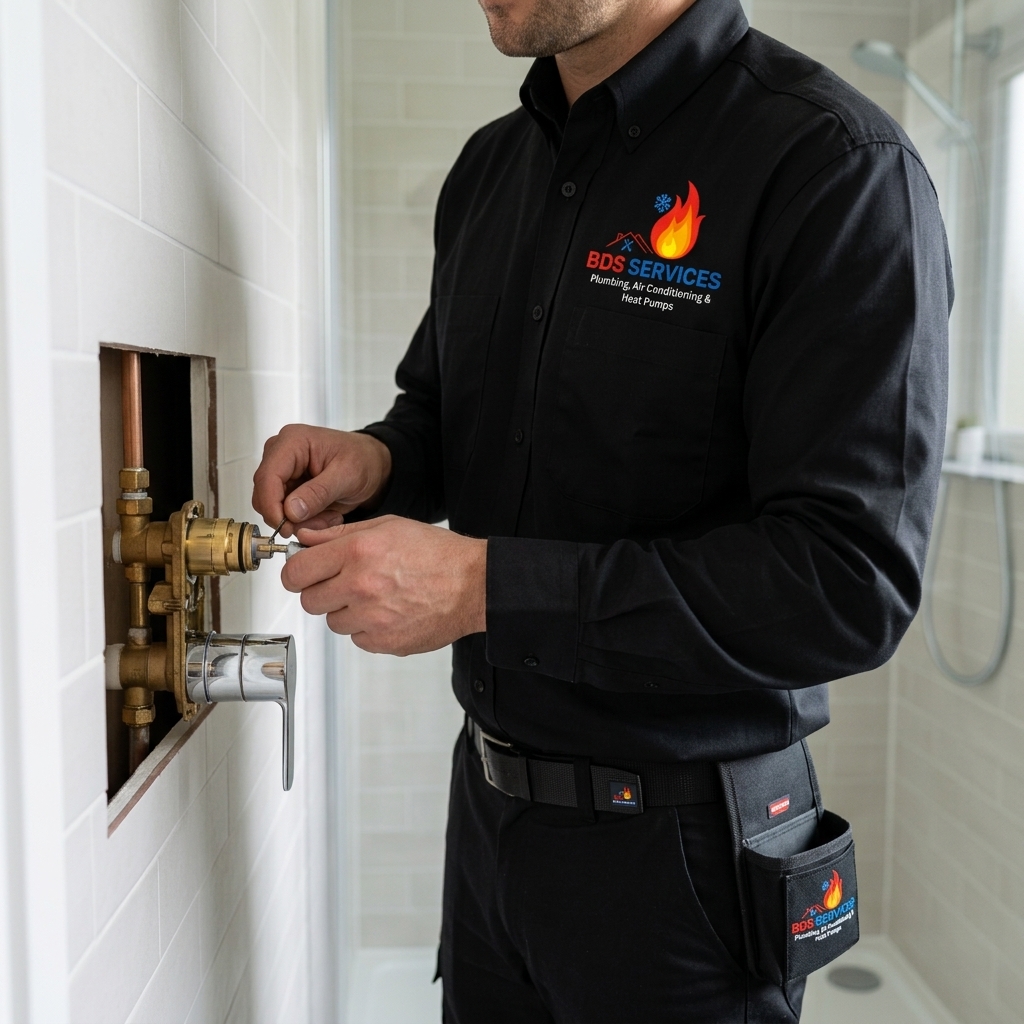
Stepping into the shower expecting warm water only to get freezing cold—or scalding hot—is very frustrating.
If your thermostatic shower valve stops regulating temperature, drops in pressure, or drips constantly, you are not alone. Thermostatic mixing valves blend hot and cold water to a precise temperature. When one part breaks, the whole system fails.
This guide explains why your thermostatic shower is failing and how you can fix it.
How a Thermostatic Shower Valve Works
Inside every thermostatic shower valve sits a small part called a thermostatic cartridge.
This cartridge contains a wax element. The wax expands and contracts based on incoming water temperatures. It constantly adjusts the mix of hot and cold water entering the valve chamber. This mechanism keeps your outlet water temperature steady, even if someone flushes a toilet downstairs.
When mineral buildup or worn parts disrupt this balance, your shower stops working properly.
Top Reasons Your Thermostatic Shower Isn’t Working
1. Limescale-Clogged Thermostatic Cartridge
The Symptom: Water stays cold, remains lukewarm, or changes temperature suddenly.
The Cause: Hard water deposits calcium and magnesium inside the cartridge over time. This limescale blocks the internal wax element from moving freely.
The Fix: Remove the thermostatic cartridge and soak it in a descaling solution. Replace the cartridge entirely if the scale damage is severe.
2. Blocked In-Line Mesh Filters
The Symptom: You experience weak water flow even though pressure is normal elsewhere in the house.
The Cause: Small mesh filters sit at the hot and cold water inlets. These filters catch pipe debris, solder flux, and limescale before dirt reaches the valve. Over time, trapped debris blocks the water flow.
The Fix: Turn off your water supply. Isolate the shower valve, remove the filters, and clear out the trapped debris.
3. Imbalanced Water Pressures
The Symptom: Temperature fluctuates wildly whenever someone uses another tap.
The Cause: Thermostatic valves need balanced hot and cold water pressures. A high-pressure mains cold supply will easily overpower a low-pressure gravity hot supply.
The Fix: Fit a pressure-reducing valve on the high-pressure cold line. Alternatively, install a dedicated shower booster pump on low-pressure hot lines.
4. Reversed Hot and Cold Supply Pipes
The Symptom: The shower runs boiling hot on the cold setting and freezing cold on the hot setting.
The Cause: Installers must connect the hot supply to the left and cold to the right. If a plumber swapped these pipes during installation, the valve cannot regulate heat.
The Fix: Reroute the pipework behind the wall or install a special reverse-cartridge if your manufacturer makes one.
5. Boiler or Water Heater Failure
The Symptom: Cold water comes out of every tap in the house.
The Cause: The issue lies within your boiler, heat pump, or hot water cylinder rather than the shower valve itself.
The Fix: Check your boiler pressure gauge and inspect error codes. You can also read our guide on common household plumbing problems in the West Midlands to diagnose central heating issues.
6. Trapped Air in the Pipework (Airlock)
The Symptom: No water comes out of the shower head after recent plumbing work.
The Cause: Air bubbles get trapped inside the supply pipes after someone drains the system. These air pockets block water from reaching the valve.
The Fix: Force the air out by flushing mains water pressure through the line using a hose pipe connection.
7. Temperature Stop Ring Engagement
The Symptom: The water feels warm, but it never reaches a comfortable hot temperature.
The Cause: Modern shower valves include a safety stop ring. This ring prevents accidental scalding. If the stop ring shifts, it caps maximum heat too early.
The Fix: Take off the temperature handle. Reset the calibration ring using your manufacturer instructions, then refit the handle.
How to Troubleshoot Your Shower Step-by-Step
Follow these quick diagnostic steps before buying replacement parts:
Test Other Taps: Run the hot tap at your bathroom sink. If hot water fails everywhere, your boiler needs attention.
Check System Pressure Requirements: Make sure your system meets the bar pressure required by your shower model. Check official UK water supply standards directly through the Water Regulations Advisory Scheme (WRAS).
Clean the Showerhead: Unscrew your showerhead and clear away scale. A clogged showerhead creates back-pressure that forces the valve to shut down.
Inspect Check Valves: Defective non-return valves allow hot water to cross into cold pipes. Replace worn check valves to fix cross-flow issues.
When to Call a Professional Plumber
Cleaning a showerhead is a simple DIY job, but taking apart hidden shower valves is complex. You must isolate main water supplies, handle fragile brass parts, and test water pressures correctly.
Forcing a stuck cartridge can burst internal pipework, break tiles, or create leak hazards.
If your shower still malfunctions, our team at BDS Services Ltd can help. We repair thermostatic valves, replace worn cartridges, and install new bathroom systems across Birmingham and the West Midlands.