23 August 2026

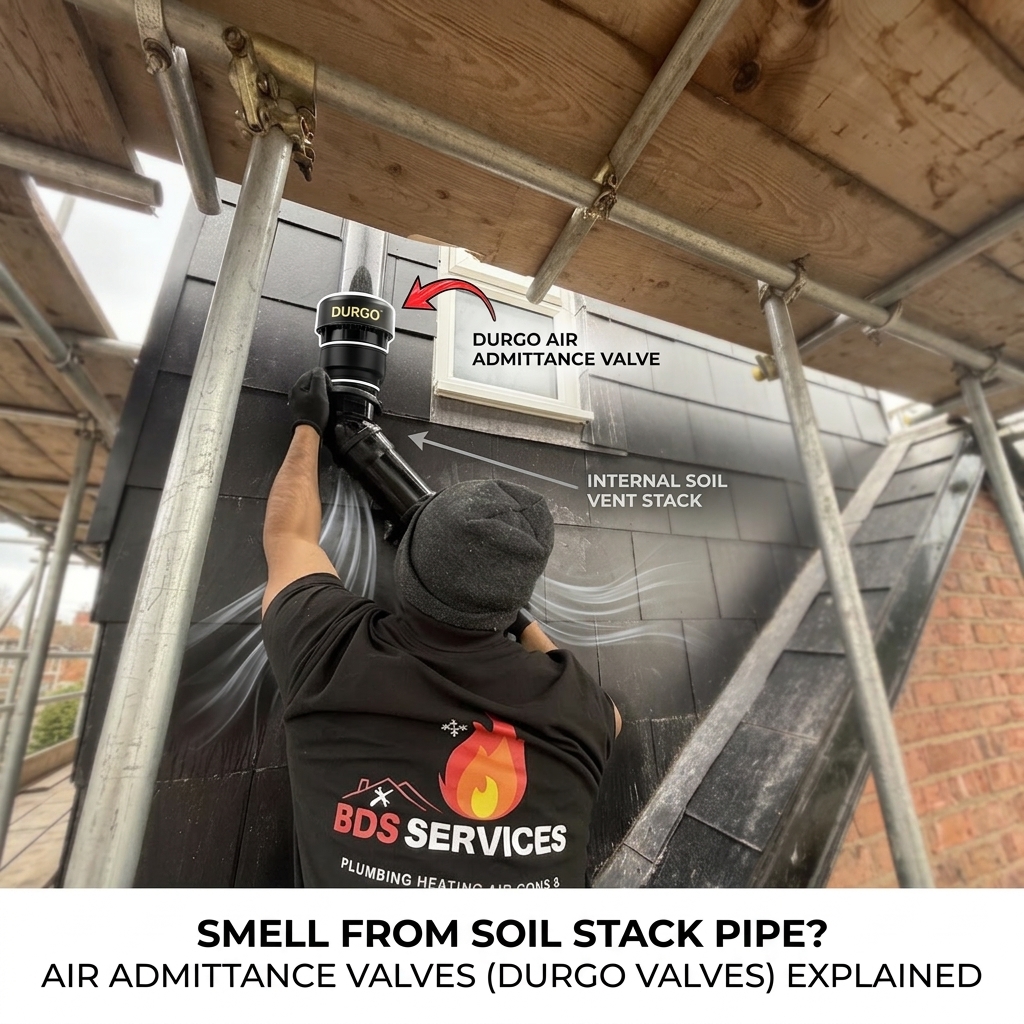
A close-up view of a BDS Services engineer working at height on scaffolding, fitting a specialized black Durgo Air Admittance Valve (AAV) onto a vertical uPVC soil vent pipe stack on a house with grey cladding. The image includes text overlays identifying the components and a title for a blog post about drain smells.

Smell From Soil Stack Pipe? Air Admittance Valves (Durgo Valves) Explained

Have you noticed a foul sewage smell in your bathroom? Alternatively, do you hear loud gurgling from your washbasin when you flush the toilet? Choosing between an air admittance valve vs open vent pipe system is the most effective way to solve drainage noise and odors permanently. Every home drainage network needs constant airflow to function properly. As waste water rushes down a pipe, it creates a strong suction vacuum. Without adequate air intake, this vacuum pulls water straight out of your sink traps. Consequently, foul sewer gas enters your living space. Understanding how an air admittance valve vs open vent pipe layout works helps you protect your home’s hygiene and air quality. Comparing an Air Admittance Valve vs Open Vent Pipe Setup 1. Traditional Open Vent Pipe Systems Historically, plumbers extended soil stacks straight through the roofline. Therefore, the pipe terminates high above the house in open air. The Pros: This open pipe provides two-way airflow naturally. Consequently, it breaks vacuums quickly and releases sewer gas safely outside. The Cons: However, roof penetrations create persistent leak risks. Furthermore, birds often nest inside the exposed top pipe. If your external stack is aging or leaking, explore our guide on replacing cast iron soil pipes with uPVC. 2. Modern Air Admittance Valve (Durgo Valve) Systems An Air Admittance Valve (AAV) is a clever one-way mechanical valve. Plumbers fit this unit directly on top of an internal soil pipe inside the building. Toilet Flushes → Vacuum Formed → Valve Diaphragm Opens → Air Enters Pipe → Vacuum Clears → Valve Closes One-Way Operation: Gravity holds the internal rubber diaphragm shut under normal conditions. Thus, smelly gases stay trapped inside your pipework. When a toilet flush creates suction, the valve opens instantly. As a result, fresh room air enters the pipe and restores balanced pressure. No Roof Holes: Consequently, engineers can install AAVs internally inside bathroom boxing or loft spaces. If you are reconfiguring your suite, check our advice on rerouting soil pipes for a new bathroom layout. Installation Rules for an Air Admittance Valve vs Open Vent Pipe You must follow strict guidelines under UK Building Regulations Document H when choosing an air admittance valve vs open vent pipe setup: Placement Height Rules Specifically, you must install the valve at least 100mm higher than the highest water outlet on the connected sinks or baths. Air Supply Requirements Furthermore, never box an AAV into an airtight void. The valve needs a steady supply of room air via a decorative louvered grille. Main Sewer Venting Rules However, a drainage system cannot rely exclusively on AAVs. Therefore, your property layout must retain at least one open vent stack to manage main public sewer pressure. Diagnosing Faulty Durgo Valves and Drain Odors Over time, internal rubber seals degrade due to grease and debris. As a result, a worn Durgo valve leaks foul sewer gas back into your home. If your sinks gurgle or your bathroom smells bad, BDS Services Ltd can help. Our experienced team can quickly test your waste pipes, clear blockages, and replace worn valves. Call our West Midlands plumbers on 07429776336, book online via our plumbing services page, or reach out directly through our local Birmingham plumber team.

Smell From Soil Stack Pipe? Air Admittance Valves (Durgo Valves) Explained Read Post »
Replacing Cast Iron Soil Pipe with uPVC – BDS Services

Replacing Old Cast Iron Soil Pipes with Plastic/uPVC: What Homeowners Need to Know

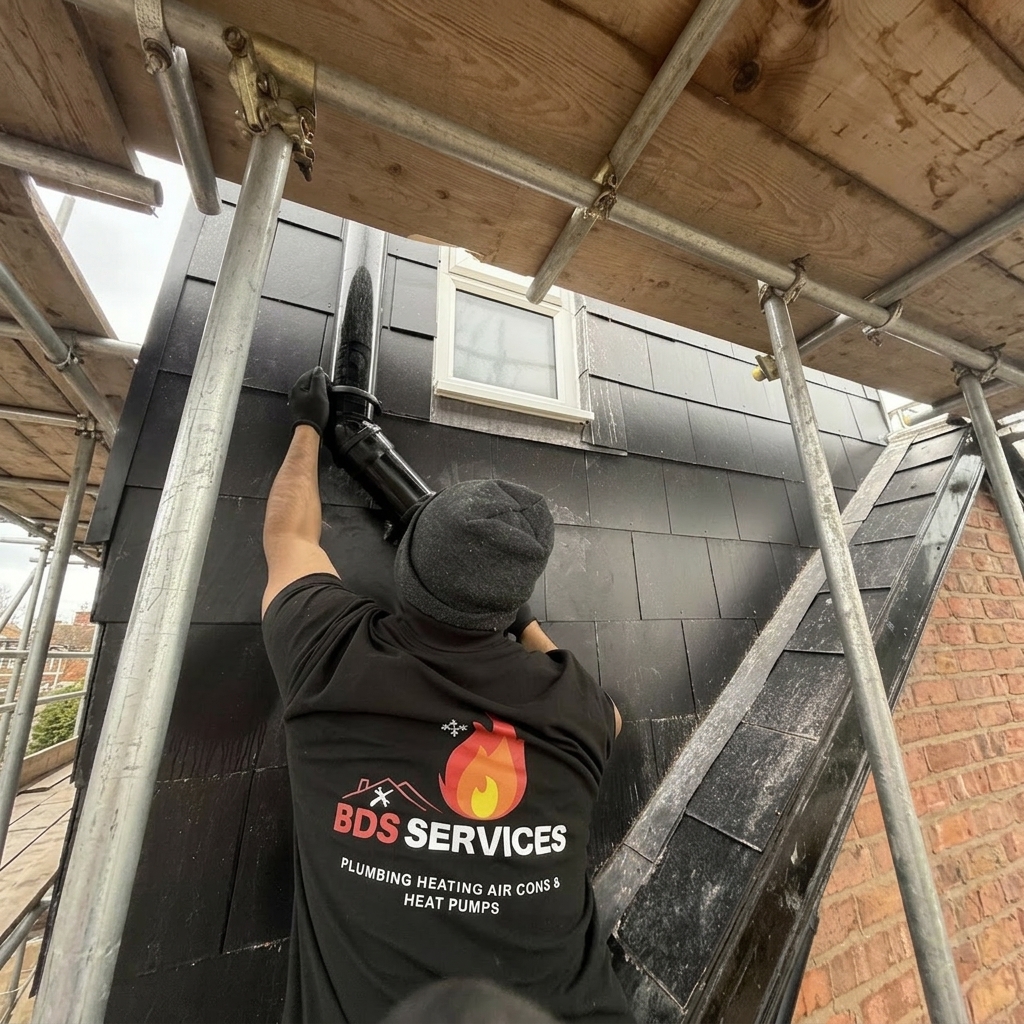
Cast iron soil stack pipes were the gold standard for UK drainage systems throughout the 19th and mid-20th centuries. While exceptionally durable, age, constant exposure to wastewater, and external weathering eventually take their toll. Cast iron scales internally, snags debris, and rusts from the inside out—often causing hairline cracks, persistent dampness, or foul drainage leaks along your property’s exterior walls. Upgrading to a modern 110mm uPVC soil stack system restores full hydraulic flow, eliminates rust, and reduces future maintenance. However, replacing cast iron soil pipes with uPVC involves heavy structural loads and precise technical execution. Technical Challenges of Cast Iron Removal 1. Structural Weight and Anchoring Cast iron is extremely heavy. A full 3-story external cast iron stack can weigh hundreds of kilograms. Plastic uPVC pipe, by contrast, is flexible and lightweight. The Risk: If you cut into a cast iron stack without supporting the weight above it, the remaining upper section will collapse downward under gravity, shattering roof slates or causing severe injury. The Solution: Professional plumbers install heavy-duty steel pipe clamps and structural wall brackets above and below every planned cut point before making a single incision. Step-by-Step Installation Process Step 1: Safe Sectional Cutting Using angle grinders or specialized hydraulic snap-cutters, engineers remove the degraded cast iron section by section. Working at height requires secure scaffold towers or MEWP access to handle the heavy metal safely. Step 2: Selecting the Correct Transition Couplings Connecting new 110mm uPVC pipe to surviving cast iron or underground clay drainage requires specialized fittings. Standard push-fit connectors will not form an airtight or watertight seal due to differences in outside pipe diameters. Joint Type Application Key Specification Flexible Elastomeric Couplings Cast Iron to uPVC Stainless steel shear bands with EPDM rubber sleeves Adaptor Bush Connectors Spigot to Socket Joints Solvent-weld or push-fit chemical-resistant seals Step 3: Setting Thermal Expansion and Gradient Plastic pipes expand and contract with temperature fluctuations from hot washing machines and bath discharges. Expansion Gaps: Every push-fit socket on a uPVC stack must be pulled back 10mm after full insertion to allow for thermal movement. Support Spacing: Vertical 110mm uPVC pipework requires pipe clips anchored to the masonry wall at maximum 2.0-meter intervals to prevent bowing. Professional Soil Stack Upgrades in the West Midlands Replacing a cast iron soil stack requires expert structural anchoring, precise pipe sizing, and full compliance with UK Building Regulations Part H (Drainage and Waste Disposal). BDS Services Ltd delivers fast, fully compliant drainage and pipework upgrades across Birmingham and the West Midlands. Call our team today on 07429776336 or book a site visit online via our plumbing services page.

Replacing Old Cast Iron Soil Pipes with Plastic/uPVC: What Homeowners Need to Know Read Post »

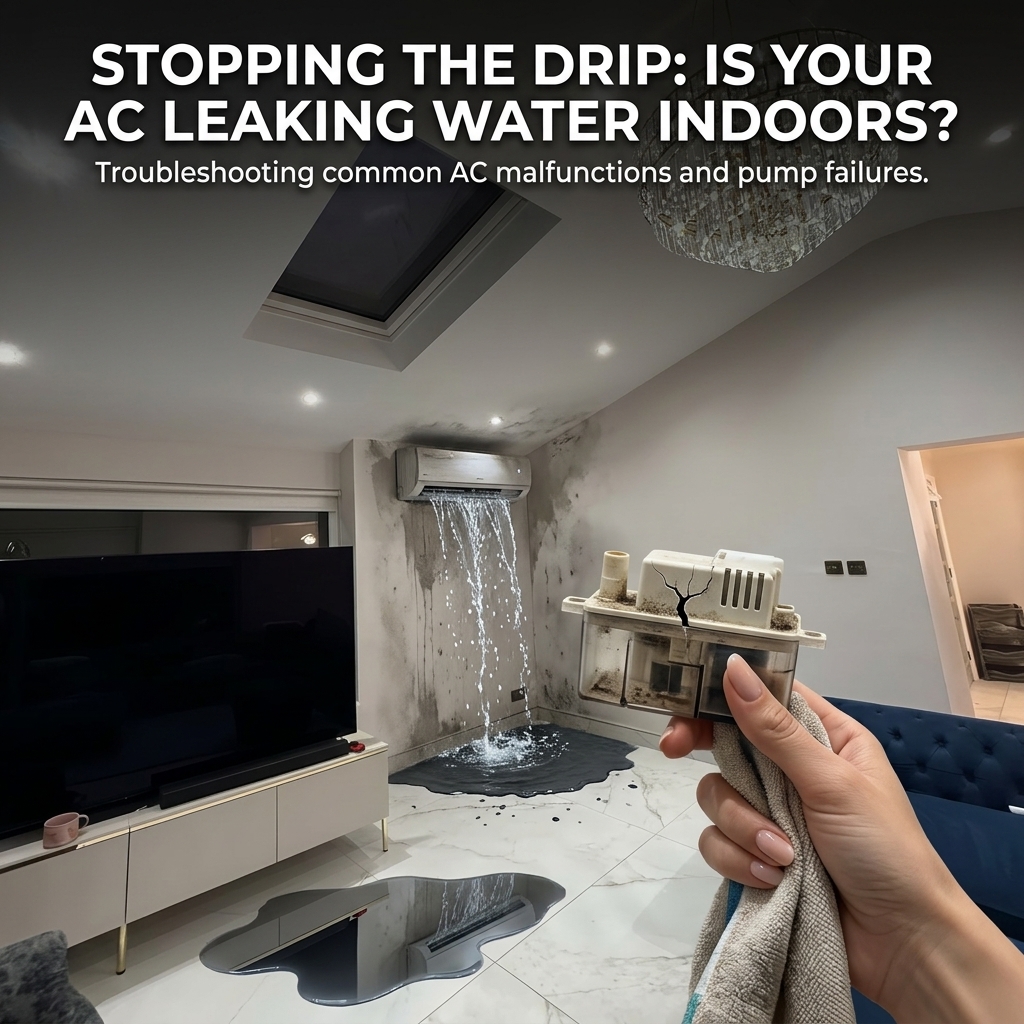
Air Conditioner Leaking Water Indoors

Why Is My Wall-Mounted Air Conditioner Dripping Water Inside?

Finding water dripping down your interior wall or pooling beneath your air conditioning unit is one of the most frustrating issues a UK homeowner can face. While it might look like a major plumbing catastrophe, water leaks are usually caused by a simple malfunction in how the system manages collected moisture. When your system cools your room, it extracts humidity from the air. That moisture condenses on the indoor cooling coil and drips into a drain pan. Under normal conditions, this water flows harmlessly outside or into an internal waste pipe. When something disrupts that flow, you get a leak indoors. Below are the primary causes of an air conditioner leaking water indoors in the UK and what needs to be done to fix it. The Main Causes of Indoor Air Conditioner Leaks 1. A Blocked Condensate Drain Line The most common culprit behind indoor leaks is a clogged condensate drain line. Over time, algae, dust, mold, and airborne debris collect inside the narrow drain pipe. The Problem: Once the line blocks, water backs up into the internal drip tray until it overflows out of the bottom of the wall unit. The Fix: An engineer uses a specialized suction pump or high-pressure nitrogen flush to clear the blockage and sanitizes the drain pan to prevent future bacterial growth. Routine air conditioning maintenance in the West Midlands prevents these blockages before they happen. 2. A Faulty or Noisy Condensate Pump In many UK homes—especially where the outdoor unit is mounted far from the indoor head—a small motorized condensate pump is installed behind or alongside the unit to lift water up and out. The Problem: If the pump’s internal float switch fails, or if the motor burns out, water can no longer be pumped away. You will often hear a continuous buzzing or rattling condensate pump noise right before the unit starts leaking. The Fix: Inspecting the pump float mechanism for debris or replacing the mini pump entirely if the motor has failed. If you suspect a mechanical failure, book a professional air conditioning repair to inspect the pump safety switch. 3. Frozen Evaporator Coils If you notice ice forming on the indoor coils or see water gushing out when the system is turned off, your unit is likely freezing up. Common Causes of Frozen Coils Dirty Air Filters: Restricts airflow, causing the coil temperature to drop below freezing point. Ice builds up and overflows the pan as it melts. Low Refrigerant: A leak in the copper pipework lowers internal pressure, freezing the remaining moisture on the coil instantly. According to the UK Government F-Gas Guidance, any work involving refrigerant leaks must be handled by an F-Gas certified technician. 4. Poor System Installation If your air conditioner has leaked since the day it was installed, the issue is likely structural: Improper Pitch: Wall units must be mounted level (or with a microscopic tilt toward the drain outlet) so gravity can pull water into the tray. Uninsulated Pipework: Uninsulated copper refrigerant lines will sweat, dropping condensation directly through your ceiling or plasterboard. Professional domestic air conditioning installation ensures correct line insulation and pitch from day one. Need Professional Air Conditioning Repairs in the West Midlands? If your wall-mounted air conditioner is leaking or making unusual pump noises, turn the unit off at the isolator switch immediately to prevent water damage to your walls and flooring. BDS Services Ltd provides fast, reliable maintenance and emergency repairs across Birmingham and the West Midlands. Contact our team today on 07429776336 or visit our contact page to book an engineer.

Why Is My Wall-Mounted Air Conditioner Dripping Water Inside? Read Post »

Shopping Basket
Scroll to Top