admin

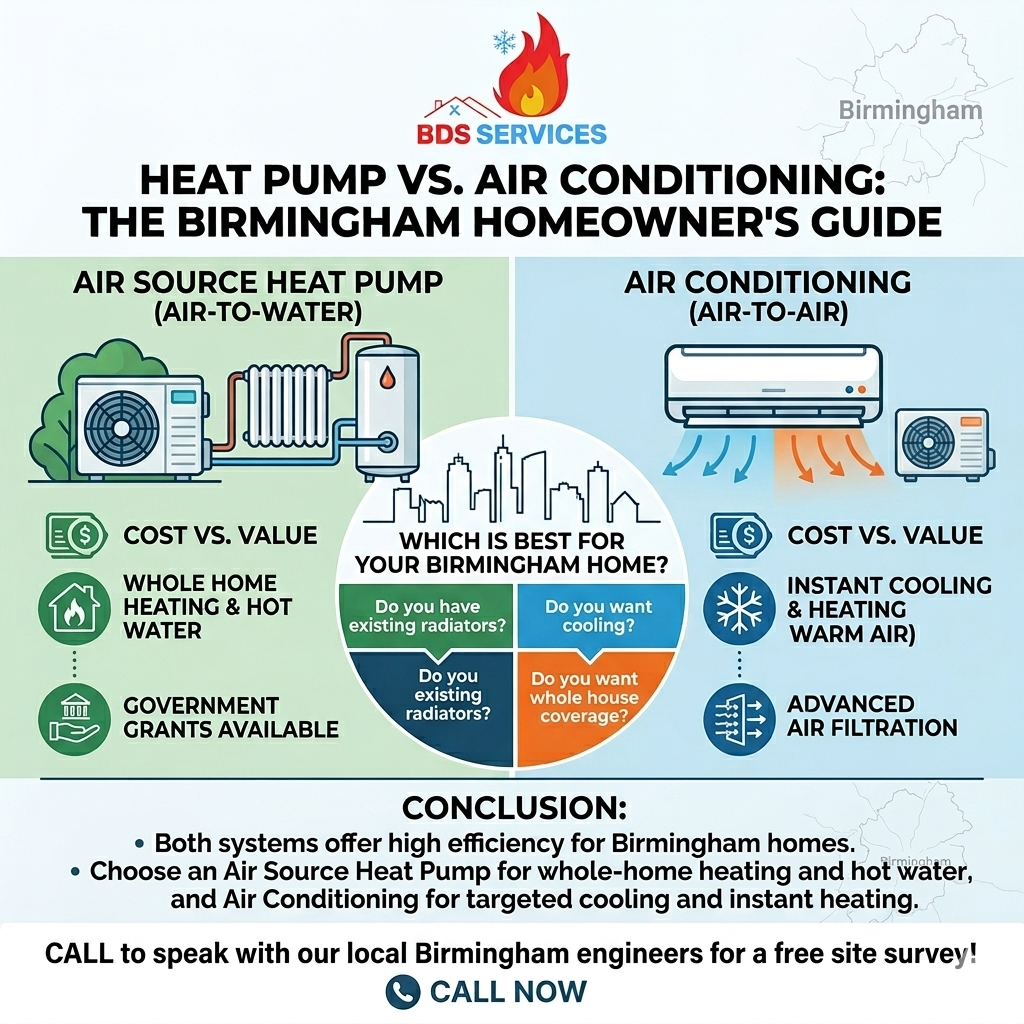
nfographic comparing Air Source Heat Pump vs. Air Conditioning for a Birmingham home by BDS Services Ltd.

Heat Pump vs. Air Conditioning: Which is Best for Heating and Cooling Your Birmingham Home?

As temperatures in the UK become more unpredictable, homeowners in Birmingham and the West Midlands are looking for smarter ways to stay comfortable year-round. While traditional central heating has been the standard for decades, two modern technologies are leading the way in energy efficiency: Air Source Heat Pumps and Air Conditioning. But which one is right for your property? In this guide, we’ll break down the differences, costs, and benefits of each to help you make an informed decision for your home. The Big Secret: They Are More Alike Than You Think Many people don’t realize that modern Air Conditioning units are actually Air-to-Air Heat Pumps. They use a refrigerant cycle to move heat from one place to another. In Summer: They move heat from inside your home to the outside (Cooling). In Winter: They reverse the process, extracting heat from the outdoor air and bringing it inside (Heating). So, when we talk about “Heat Pumps” in the UK, we are usually comparing Air-to-Water systems (which heat your radiators) to Air-to-Air systems (which blow warm or cold air through a wall-mounted unit). Option 1: Air Conditioning (Air-to-Air Heat Pumps) Air conditioning is no longer just for luxury hotels. For many Birmingham residents, it is becoming the primary way to manage climate in bedrooms, home offices, and conservatories. The Pros: Instant Climate Control: Unlike radiators, AC provides near-instant cooling or heating. Dehumidification: Perfect for the humid UK summers, AC removes moisture from the air, preventing that “sticky” feeling. Air Filtration: Most modern units from brands like Mitsubishi and Daikin include advanced filters to remove allergens and dust. Lower Initial Cost: If you only need to climate-control one or two rooms, installing AC is significantly cheaper than a full central heating overhaul. The Cons: No Hot Water: Air-to-air systems cannot heat the water for your taps or showers. Room-by-Room: You need an indoor unit in every room you wish to heat or cool. Option 2: Air Source Heat Pumps (Air-to-Water) An Air Source Heat Pump (ASHP) is designed to replace your gas boiler entirely. It connects to your existing (or upgraded) radiators and underfloor heating. The Pros: Whole-Home Solution: It handles all your heating and your domestic hot water. Government Incentives: You may be eligible for the UK Government’s Boiler Upgrade Scheme (BUS), which can provide significant grants toward installation. Eco-Friendly: ASHPs are incredibly efficient, often producing 3 to 4 units of heat for every 1 unit of electricity used. The Cons: Higher Upfront Cost: Even with grants, the Air Source Heat Pump installation cost is higher than a standard AC unit. No Cooling: Most air-to-water heat pumps in the UK are not set up to provide air conditioning in the summer. Comparison at a Glance Feature Air Conditioning (Air-to-Air) Heat Pump (Air-to-Water) Cooling Yes (Excellent) No Heating Yes (Fast) Yes (Consistent) Hot Water No Yes Installation Time 1 Day (Typical) 3–5 Days Best For Bedrooms, Offices, Extensions Whole House Renovations Which Should You Choose? Choose Air Conditioning if: You struggle with the heat in the summer and want a cost-effective way to heat specific rooms in the winter. It is the perfect solution for Birmingham homeowners who want to keep their existing boiler for hot water but want “comfort zones” in the house. Check out our guide to AC installation costs to see if it fits your budget. Choose an Air Source Heat Pump if: You are looking to move away from gas entirely, want to lower your carbon footprint, and are planning a long-term investment in your property’s infrastructure. Get Expert Advice in Birmingham Still not sure which system is right for your West Midlands home? At BDS Services Ltd, we specialize in both plumbing and climate control. Our F-Gas certified engineers can assess your property and provide a bespoke recommendation. Whether you need a local plumber in Birmingham for your radiators or a specialist for a new AC installation, we are here to help. Contact us today for a free, no-obligation quote.
Heat Pump vs. Air Conditioning: Which is Best for Heating and Cooling Your Birmingham Home? Read Post »

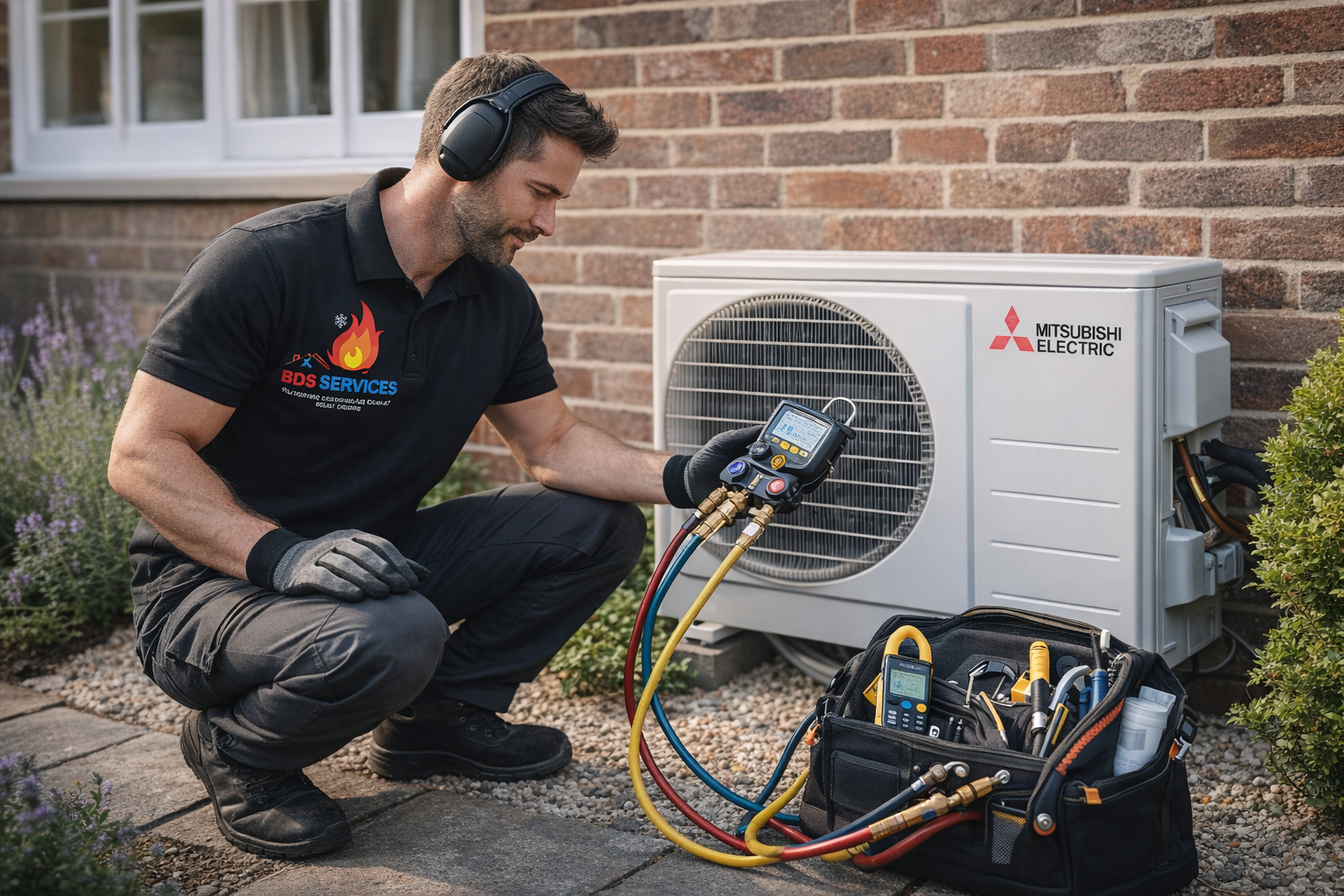
Mechanic repairing Air Conditioning Not Heating or Cooling

Why Your Air Conditioning Is Not Heating or Cooling Properly (UK Guide)

If your air conditioning isn’t heating properly in winter or cooling in summer, you’re definitely not the only one. We see this all the time on jobs across Birmingham and the West Midlands. A lot of systems we install and repair are heat pumps, so they’re designed to do both. When something’s off, it usually affects the whole system — not just heating or cooling. Before assuming the worst, here are a few common things we check first when we get called out. 🔧 1. Check the Mode First (You’d Be Surprised) This might sound obvious, but it’s probably the most common issue we come across. We’ve had plenty of call-outs where everything was working fine — the system was just set to the wrong mode. Cooling mode ❄️ Heating mode ☀️ Sometimes it’s just been switched accidentally on the remote. 👉 If you’re not sure how your system should be set up, have a look at our Air Conditioning Services page to understand how your system works. 🌬️ 2. Dirty Filters Causing Weak Airflow This is another big one. If the filters are clogged, the system can’t push air properly. That affects both heating and cooling. We recently attended a job in Birmingham where the unit wasn’t heating at all — turned out the filters hadn’t been cleaned in over a year. Once cleaned, it was working as it should. 👉 If your system hasn’t been serviced in a while, it’s worth booking a proper check through our Air Conditioning Maintenance & Servicing service. ❄️ 3. Low Refrigerant (Gas Issue) If your system is low on refrigerant, it won’t perform properly — simple as that. You might notice: Air not getting properly warm or cold System running constantly Ice forming on the unit This isn’t something you can fix yourself. 👉 We handle this as part of our Air Conditioning Repair Services, including leak checks and recharging the system safely. 🌳 4. Outdoor Unit Blocked or Struggling The outdoor unit does most of the hard work, especially in heating mode. If it’s blocked with dirt or doesn’t have enough airflow, performance drops. In winter, we also see units freezing up, which can stop them heating properly. 👉 Just make sure nothing is blocking it — if it still struggles, it’s worth getting it looked at. 🌡️ 5. Thermostat or Sensor Playing Up Sometimes the system just isn’t reading the temperature correctly. That can cause: Heating stopping too early Room not reaching the right temperature System turning on and off too often Usually needs a proper check to diagnose. ⚠️ 6. System Not Right for the Space To be honest, we do come across installs where the unit just isn’t suitable for the room. If it’s undersized or not installed correctly, it’ll always struggle — especially in extreme temperatures. 👉 If you’re thinking about upgrading, our Air Conditioning Installation Services can help you choose the right system for your space. When It’s Time to Call Someone If you’ve checked the basics and it’s still not right, it’s best to get it sorted properly. Give us a call if: No heating in winter No cooling in summer Strange noises or smells Energy bills going up for no reason You can get in touch through our Contact Page, and we’ll take a look. Useful Advice If you want to understand how heat pump systems work in more detail, you can also check guidance from the Energy Saving Trust — they’ve got some good practical info for UK homeowners. Final Word Most of the time, these issues are something simple — filters, settings, or minor faults. But if left too long, they can turn into bigger problems. At BDS Services Ltd, we deal with this day in, day out across Birmingham and the West Midlands, so we can usually spot the issue pretty quickly. And if your system turns out not to be worth repairing, we also supply and install new air conditioning units at very competitive prices — with systems starting from just £899. 👉 If your air conditioning isn’t heating or cooling properly, get in touch and we’ll give you a straightforward, honest assessment.

Why Your Air Conditioning Is Not Heating or Cooling Properly (UK Guide) Read Post »

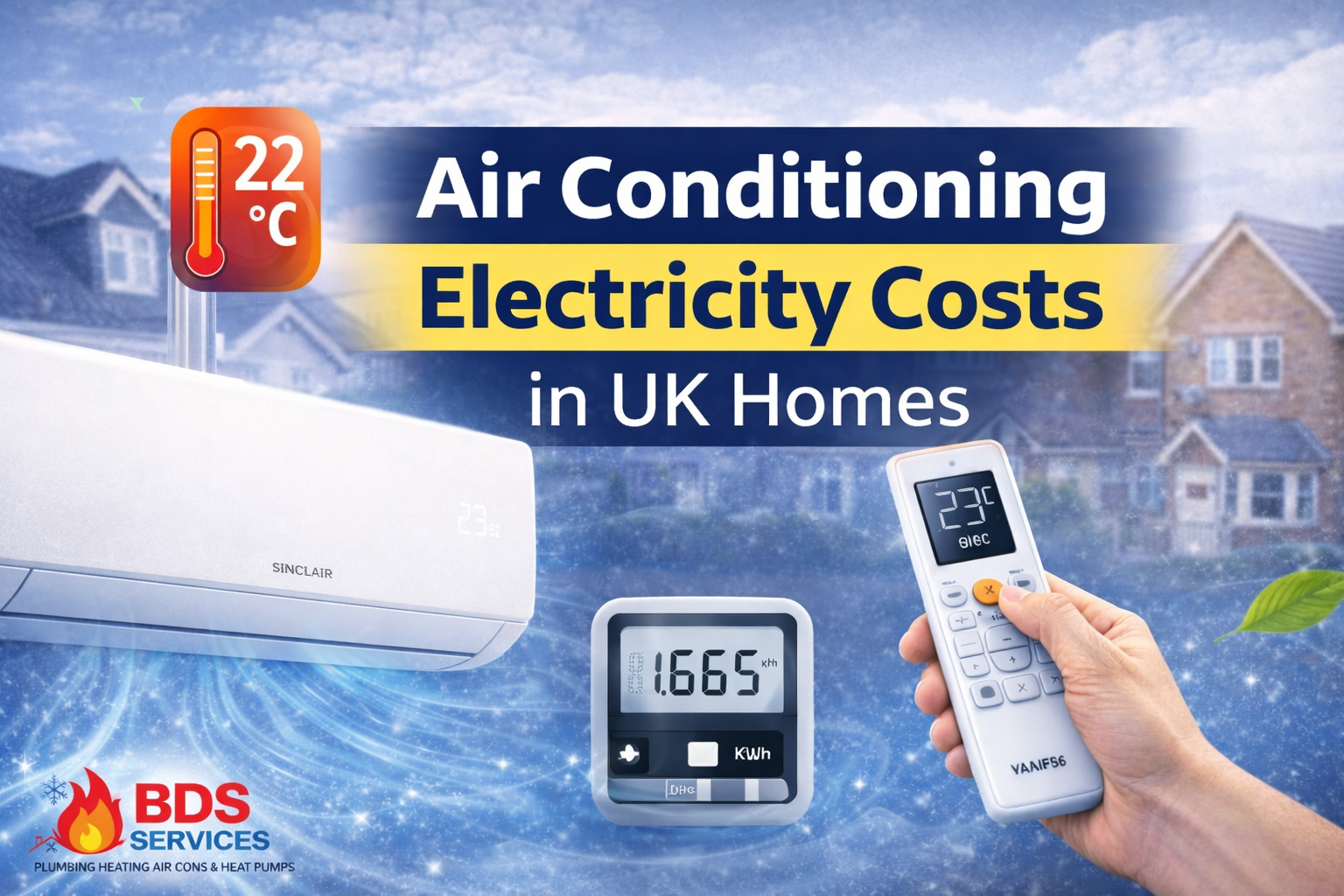
Air conditioning electricity cost in uk homes

How Much Electricity Does Air Conditioning Use in UK Homes?

As UK summers continue to get warmer, more homeowners are investing in air conditioning. One of the biggest concerns we hear at BDS Services Limited is: “How much electricity does air conditioning use in the UK?” The answer depends on the system you choose — but modern air conditioning is far more energy-efficient than most people expect. Understanding Air Conditioning Power Consumption Air conditioning systems use electricity to: Run the compressor Circulate air with fans Power internal controls Energy usage is measured in kilowatt-hours (kWh) — the same unit used on your electricity bill. 👉 The higher the kWh usage, the higher the cost. Typical Air Conditioning Running Costs in the UK Here’s what most UK homeowners can expect: Bedroom Air Conditioning (2.5kW System) 0.6 – 0.8 kWh per hour Around 17p – 22p per hour 👉 Ideal for bedrooms and small offices Living Room Air Conditioning (5kW System) 1.4 – 1.6 kWh per hour Around 39p – 45p per hour 👉 Suitable for lounges and family rooms Large Open-Plan Areas (7kW System) 2.0 – 2.4 kWh per hour Around 56p – 67p per hour 👉 Best for kitchen-diners and large spaces Is Air Conditioning Expensive to Run? Not necessarily. Compared to other household appliances: Oven: similar or higher energy use Tumble dryer: often more expensive per cycle Dishwasher: comparable usage 👉 In many cases, air conditioning costs less than people expect to run in the UK. Why Modern Air Conditioning Is Energy Efficient Today’s systems use inverter technology, which: Adjusts output based on room temperature Avoids constant on/off cycling Reduces unnecessary energy use 👉 This can lower energy consumption by up to 30–40% Annual Electricity Usage Typical yearly energy consumption: Small systems: 200 – 1,000 kWh/year Larger systems: 3,000 – 5,000 kWh/year Most UK homes only use air conditioning during warmer months, so real costs are often lower. What Affects Air Conditioning Energy Usage? Several factors influence your running costs: Property insulation Room size Thermostat settings Length of use System efficiency 👉 A properly sized and installed system is key to keeping costs low. Tips to Reduce Air Conditioning Costs Want to keep your bills down? Follow these simple tips: Set temperature to 22–24°C Keep windows and doors closed Use timers or smart controls Clean filters regularly Book regular servicing Why Professional Installation Matters Incorrect installation can lead to: Higher energy bills Poor performance Shorter system lifespan That’s why it’s important to work with experienced professionals. 👉 Learn more about our air conditioning installation services:/air-conditioning-installation 👉 Need ongoing maintenance? Visit:/air-conditioning-servicing Air Conditioning vs Other Cooling Options While fans use less electricity, they don’t actually cool the air. Air conditioning: Provides real temperature control Improves air quality Helps with sleep and comfort 👉 It’s a long-term solution, not just a temporary fix. Final Thoughts Air conditioning power consumption in UK homes is much lower than most people assume, especially with modern systems. For most households: Running costs are manageable Efficiency is high Comfort is significantly improved Get Expert Advice At BDS Services Limited, we specialise in energy-efficient air conditioning installation across the UK. 👉 Contact us today for: Free advice System recommendations No-obligation quotes Call us or enquire online to get started.

How Much Electricity Does Air Conditioning Use in UK Homes? Read Post »

Are Air conditioners reliable in the UK?

Are Air Conditioners Reliable in the UK? A Complete Guide for West Midlands Homeowners

The UK has always been known for its mild, changeable weather. But in recent years, that has changed dramatically. The summer of 2025 was the hottest on record, with temperatures exceeding 30°C across much of the country. Indoor overheating is now reported in nearly 80% of UK homes — a huge increase from just over 20% a decade ago. At the same time, air conditioning adoption has surged to around 21% of households. For homeowners across Birmingham, Wolverhampton, Dudley, Walsall, Solihull, West Bromwich, and the wider West Midlands, the question is no longer “Do I need air conditioning?” but rather: “Can I rely on it when I need it most?” At BDS Services Ltd, we’ve installed, maintained, and repaired hundreds of systems locally. The short answer is: yes — modern air conditioning is highly reliable, when installed and maintained correctly. The Changing UK Climate – Why Reliability Matters British summers are no longer mild. The UK’s 10 hottest years have all occurred since 2002 Heatwaves are longer and more frequent Indoor temperatures can exceed outdoor temperatures by 10°C Traditional UK homes — especially Victorian and 1930s builds — trap heat, making cooling difficult. A reliable air conditioning system is no longer a luxury. It’s becoming essential for: Comfort Sleep quality Health and safety during extreme heat How Air Conditioning Works in UK Homes Modern UK air conditioning systems are: Inverter-driven (energy efficient) Quiet and reliable Capable of both cooling and heating How It Works Indoor unit absorbs heat Outdoor unit releases heat Refrigerant transfers energy efficiently Most systems are reversible, meaning they also work as heat pumps — ideal for UK weather. Operating range: Winter: down to -15°C Summer: up to +46°C Are Air Conditioners Reliable in the UK? Reliability depends on three key factors: 1. Brand Quality Top-performing brands in UK homes: Mitsubishi Electric Daikin Panasonic Fujitsu Worcester Bosch Climate Series These brands are known for: Long lifespan (15–20+ years) Quiet operation Strong warranties (5–7 years) 2. Professional Installation Poor installation is the #1 cause of failure. Common issues: Incorrect system sizing Poor pipe insulation Bad outdoor unit placement Electrical faults At BDS Services Ltd, we carry out: Full heat load calculations Proper system design Certified F-Gas compliant installation 3. Regular Maintenance Annual servicing ensures: Maximum efficiency Lower energy bills Longer system lifespan Benefits of Reliable Air Conditioning Year-round comfort (cooling + heating) Better sleep and productivity Improved air quality (filters dust, pollen) Dehumidification (reduces mould risk) Increased property value The Downsides (Honest Overview) Cost Installation: £1,049 – £4,500 (typical multi-room system) Running Costs Efficient systems (A+++) Slight increase during heatwaves Environmental Impact New systems use low-GWP refrigerants More efficient than traditional heating systems Common Problems and How to Avoid Them 1. Dirty Filters Reduces efficiency by up to 15% Clean every 1–3 months 2. Refrigerant Leaks Caused by poor installation Prevent with annual servicing 3. Blocked Outdoor Units Keep clear space around unit 4. Drainage Issues Regular servicing prevents leaks 5. Sensor or Thermostat Faults Use modern smart controls for monitoring. Check our air conditioning Maintenance tips. Real Customer Experiences in the West Midlands Dudley homeowner: Reduced indoor temperatures from 32°C and improved sleep. Learn more.. Wolverhampton business: Zero breakdowns after upgrading to a premium system. Learn more.. Choosing the Right System Flats: Wall-mounted units Houses: Multi-split systems New builds: Integrated HVAC systems Allergy sufferers: Advanced filtration systems We provide free surveys and tailored quotes for every property. Conclusion Yes — air conditioners are reliable in the UK. But only when: You choose a trusted brand Installation is done professionally The system is properly maintained Modern systems are efficient, durable, and perfectly suited to UK conditions. Call to Action Don’t wait for the next heatwave. Get reliable, year-round comfort with BDS Services Ltd. 📞 Call: +44 7429 776336📧 Email: info@bdsservicesltd.co.uk We cover Birmingham, Wolverhampton, Dudley, Walsall, Solihull, West Bromwich, and surrounding areas.

Are Air Conditioners Reliable in the UK? A Complete Guide for West Midlands Homeowners Read Post »

Best Air Conditioning Units in the UK: Mitsubishi Heavy Industries Advantages Explained

With rising summer temperatures in the UK and increasing demand for energy-efficient cooling and heating, more homeowners and businesses are now searching for reliable air conditioning systems. One brand that consistently stands out is Mitsubishi Heavy Industries (MHI) — a global manufacturer known for advanced engineering, durability, and high-efficiency HVAC technology. If you are researching the best air conditioning system for your home or office, this guide explains: Why Mitsubishi Heavy Industries air conditioners are highly rated How they compare with other brands Their energy efficiency advantages Why professional installation is essential At BDS Services Limited, we provide professional air conditioning installation across the West Midlands, with standard Mitsubishi Heavy Industries inverter systems starting from just £1049 installed. We are proud to be one of the top air conditioning service providers in the region, fully compliant with F-Gas regulations, TrustMark standards, and full insurance coverage. Why Mitsubishi Heavy Industries Air Conditioning Units Are So Popular Mitsubishi Heavy Industries has over 90 years of engineering experience, producing advanced heating and cooling systems used worldwide in homes, offices, and commercial buildings. Their systems are recognised for: High energy efficiency Long-term reliability Advanced inverter technology Quiet operation Strong cooling and heating performance Many UK installers recommend MHI systems because they are designed for year-round comfort and long-lasting performance. 1. Advanced Inverter Technology – Lower Energy Bills One of the main reasons people search for Mitsubishi Heavy Industries air conditioners is their advanced inverter technology. Traditional air conditioners turn on and off repeatedly, consuming large amounts of electricity. In contrast, inverter technology adjusts compressor speed to maintain a steady temperature. This provides several benefits: ✔ Reduced electricity consumption✔ Stable indoor temperature✔ Longer system lifespan✔ Less mechanical wear Modern MHI inverter systems use high-efficiency compressors designed to reduce power loss and improve cooling efficiency significantly. For homeowners and businesses in the UK, this means lower energy bills while maintaining comfortable indoor temperatures year-round. 2. Exceptional Energy Efficiency (A+++ Rated) Energy efficiency is one of the biggest concerns when choosing an air conditioning system. Many Mitsubishi Heavy Industries systems are rated A+++ for efficiency, meaning they produce significantly more heating or cooling energy compared to the electricity they consume. For example: Using 1kW of electricity can produce up to 4kW of heating or cooling energy. This makes these systems up to four times more efficient than traditional electric heating systems. As energy costs continue to rise in the UK, installing a high-efficiency inverter air conditioner can dramatically reduce running costs. 3. Heating and Cooling in One System Another major advantage of Mitsubishi Heavy Industries units is that they provide both heating and cooling. Modern air conditioning systems are actually heat pumps, meaning they can: Cool your home during summer Heat your home during winter This allows homeowners to replace expensive electric heaters or supplement central heating systems. With one installation, you get year-round climate control. 4. Excellent Air Quality and Allergen Filtration Indoor air quality is becoming increasingly important, especially for families and people with allergies. Many Mitsubishi Heavy Industries indoor units include advanced allergen filters that capture: Dust particles Pollen Bacteria These filters improve indoor air quality and make your home environment healthier. This feature makes MHI systems particularly popular for: Homes with children Work places Clinics Retail spaces 5. Quiet Operation – Ideal for Homes and Bedrooms Noise levels are an important factor when choosing an air conditioning system. MHI units are engineered for very quiet operation, making them ideal for: Bedrooms Living rooms Office rooms Home workspaces Because inverter compressors run smoothly and adjust their speed gradually, they produce less vibration and noise than conventional air conditioners. 6. Flexible Installation Options Another advantage of Mitsubishi Heavy Industries systems is installation flexibility. These systems can be installed in different configurations depending on your property. Common options include: Wall mounted air conditioning units Ceiling cassette systems Slim ducted air conditioning systems Multi-split systems connecting multiple rooms Multi-split systems can connect 2–5 indoor units to one outdoor unit, making them ideal for larger homes or commercial spaces. This flexibility allows installers to design systems that suit almost any property. 7. Smart Control & Wi-Fi Connectivity Many modern Mitsubishi Heavy Industries systems include Wi-Fi smart controls. This allows users to: Control temperature from their smartphone Schedule heating or cooling Monitor system performance remotely Smart air conditioning control helps improve energy efficiency and convenience for homeowners. Mitsubishi Heavy Industries vs Other Air Conditioning Brands When comparing air conditioning brands in the UK market, Mitsubishi Heavy Industries consistently performs well in key areas. Feature Mitsubishi Heavy Industries Typical Budget Brands Energy Efficiency Very High Medium Reliability Excellent Average Noise Level Very Quiet Moderate Technology Advanced inverter Basic inverter Lifespan 10–15+ years 6–10 years MHI systems also receive high customer satisfaction ratings and strong reliability scores in independent reviews. Why Professional Installation Is Important Air conditioning systems must be installed by qualified engineers with F-Gas certification. Proper installation ensures: Safe refrigerant handling Maximum system efficiency Compliance with UK regulations Long equipment lifespan Poor installation can reduce efficiency and cause system problems. That is why it is important to choose a trusted and certified HVAC company. Air Conditioning Installation in the West Midlands – From £1049 At BDS Services Limited, we specialise in professional air conditioning installation across the West Midlands. Our experienced engineers install high-quality Mitsubishi Heavy Industries systems for: Homes Offices Shops Restaurants Commercial buildings 🔥 Special Offer Standard Mitsubishi Heavy Industries inverter air conditioning systems starting from just £1049 installed. Our services include: ✔ Air conditioning installation✔ HVAC system design✔ Heat pump installation✔ Maintenance and servicing✔ Commercial HVAC solutions Why Choose BDS Services Limited? We are proud to be one of the top air conditioning companies in the West Midlands. Our company provides professional HVAC services with: ✔ Fully insured engineers✔ F-Gas certified technicians✔ TrustMark compliant installations✔ Experienced HVAC specialists✔ Competitive pricing✔ Reliable aftercare support Our goal is to provide high-quality air conditioning solutions that improve comfort, efficiency, and indoor air quality for homes and businesses across

Best Air Conditioning Units in the UK: Mitsubishi Heavy Industries Advantages Explained Read Post »

Bathroom Renovation in Birmingham

Planning a Bathroom Renovation in Birmingham? Here’s Everything You Need to Know

A bathroom renovation is one of the most impactful home improvement projects you can undertake — enhancing comfort, style, energy efficiency, and property value. In Birmingham’s diverse housing market, whether you’re updating a Victorian suite or installing a modern wet room, understanding the renovation process and partnering with a trusted contractor makes all the difference. In this comprehensive guide, we cover key considerations, expert planning tips, realistic timelines and costs, and how to make your renovation project smooth from start to finish. Why Bathroom Renovation Matters A bathroom should be functional, durable, and tailored to your lifestyle. A well-executed renovation can: Improve daily convenience and comfort Fix common issues like leaks, poor ventilation or outdated wiring Increase resale value and appeal Maximise storage and optimise space layout In Birmingham, where property styles vary widely, local renovation expertise is essential to blend design with structural realities. What to Expect During a Bathroom Renovation 1. Initial Consultation & Design Planning Before construction begins, work with your contractor to: Discuss your vision (modern, classic, accessible, luxury) Agree on layout changes (e.g., shifting fixtures) Select materials (tiles, sanitary ware, lighting, cabinetry) A clear design brief helps avoid guesswork and delays later.  Expert tip: Always have detailed drawings and a clear list of fixtures before work starts — this streamlines ordering and installation. 2. Accurate Quoting & Transparent Pricing Renovation costs depend on: Room size and complexity Quality and brand of fixtures Additional plumbing or electrical work Waterproofing and structural adjustments Home improvement specialists in Birmingham typically provide itemised quotes to ensure transparency. For example, average refurbishment costs (including labour and materials) vary significantly, but smaller bathroom updates often fall within mid-range budgets, whereas full redesigns with wet rooms or layout changes require a higher investment. Expert insight: Always compare fixed project quotes rather than hourly rates — fixed pricing offers clear expectations and reduces surprises. 3. Skilled Installation & Professional Teams Renovation stages typically include: Demolition & removal of old fixtures Plumbing adjustments and new pipework Electrical work (lighting, extractor fans, outlets) Waterproofing and wall preparation Tiling and flooring fitting Final fixture installation and finishing Each step requires careful sequencing to prevent reworks. Professionals manage this efficiently, ensuring waterproofing and plumbing meet UK building standards. Key Elements of a Successful Bathroom Renovation A. Waterproofing & Structural Integrity Proper waterproofing is crucial, especially for wet rooms or open showers. Inadequate membranes or tanking can lead to long-term damp issues. Always have a professional implement and inspect waterproofing systems. B. Ventilation & Lighting Good ventilation reduces mould risk and improves air quality. Combine extractor fans with natural light (where possible) and layered artificial lighting for a more inviting space. C. Accessibility & Inclusivity Modern renovations increasingly focus on future-proofing with features like walk-in showers, grab rails, non-slip flooring, and accessible fixtures, increasing independence for all age groups. Typical Bathroom Renovation Costs in Birmingham While exact figures vary, you can expect the following rough guidelines based on local trades and fitters: Basic refresh or partial update: New fixtures, tiling, and cosmetic upgrades Mid-range renovation: Layout adjustments, sanitary replacements, medium-range finishes High-end project: Wet room conversion, premium materials, custom cabinetry According to industry averages, full bathroom re-fits can range widely depending on scope — careful budgeting and detailed quotes ensure you stay in control. Timeline: How Long Does a Renovation Take? A standard renovation in Birmingham often takes 1–3 weeks, depending on: Scope of work (full strip-out vs. partial update) Inspection scheduling Material lead times Additional structural adjustments Larger projects like wet room installations or expansions may take longer — your contractor should provide a clear project timeline before work begins. Choosing the Right Bathroom Renovation Contractor Selecting a trusted contractor is critical for success. Here’s what to prioritise: Experience & Local PresenceChoose teams familiar with Birmingham’s housing stock and building regulations. Transparent CommunicationOpen dialogue and clear quotations help avoid misunderstandings. Accredited TradespeopleEnsure your contractor uses qualified plumbers, electricians, and tilers. Insurance & GuaranteesWorkmanship warranties and public liability cover protect your investment. FAQs – Bathroom Renovation in Birmingham Q: How much does a typical renovation cost?A: Costs depend on finishes and scale. Basic updates start lower, mid-range full renovations vary more broadly with fixture quality and labour inputs. Q: Do you need planning permission?A: Most internal renovations don’t require planning permission. However, structural changes may require building control approval. Q: Can I live in my home during renovations?A: Yes, but it may be disruptive — especially if utilities (water/electrics) need temporary shut-offs. Transform Your Bathroom with Confidence Bathroom renovation in Birmingham is a worthwhile investment that elevates daily life and enhances your property value. With thoughtful planning, clear communication with your contractor, and professional craftsmanship, your dream bathroom becomes a reality. Ready to renovate? Start with a detailed quote and design consultation tailored to your space and budget.

Planning a Bathroom Renovation in Birmingham? Here’s Everything You Need to Know Read Post »

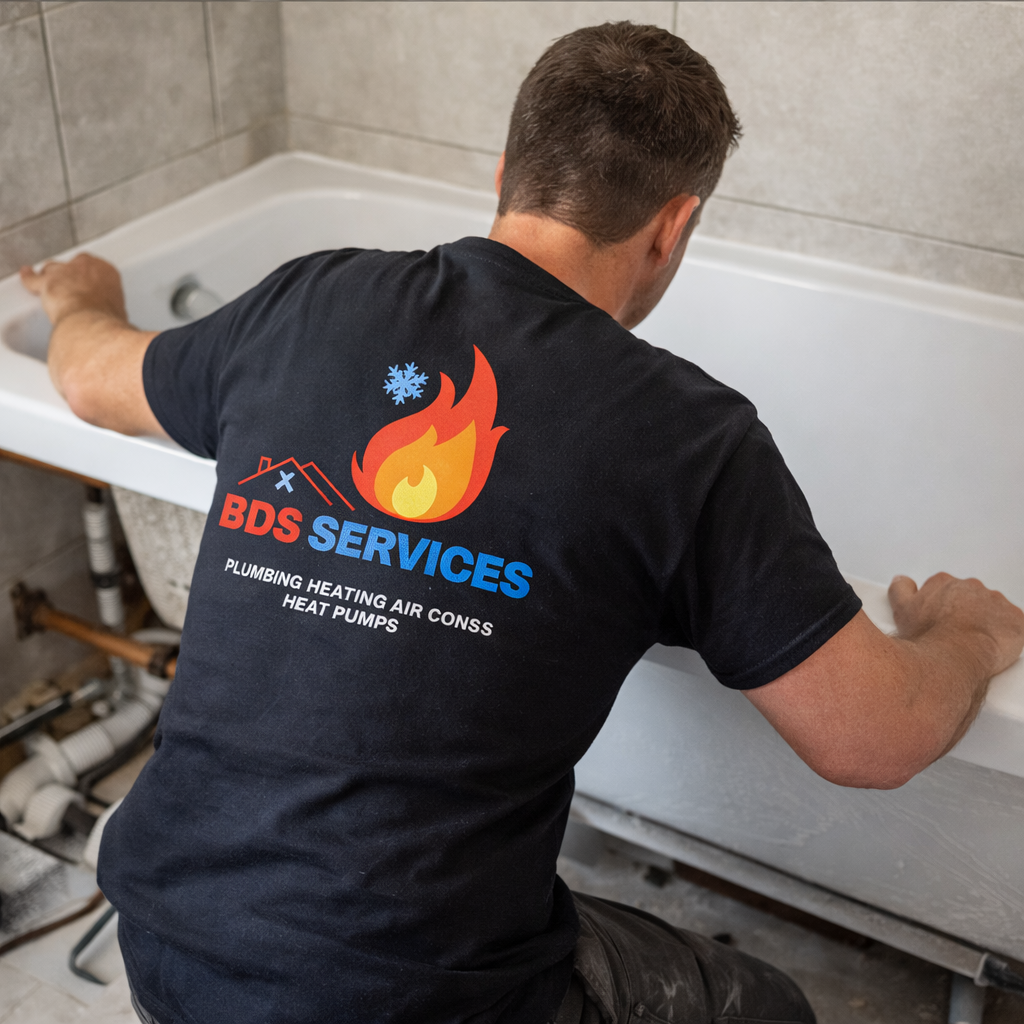
installation of bath tub

Bathtub Installation Cost Guide – Birmingham & West Midlands (2026)

Installing a new bathtub can completely transform your bathroom. However, before starting your project, it’s important to understand the real costs involved. Whether you are replacing an old bath or upgrading to a modern freestanding design, knowing the price range helps you plan properly and avoid surprises. In this 2026 guide, we explain bathtub installation costs in Birmingham and across the West Midlands. In addition, we break down labour costs, material prices, hidden expenses, and ways to save money. Average Bathtub Installation Cost in Birmingham The cost of installing a bathtub depends on several factors. For example, the type of bath, plumbing changes, and tiling work can all affect the final price. Here is a general guide for Birmingham and surrounding areas: Basic bathtub replacement: £500 – £1,200 Standard bath supply and installation: £700 – £1,500 Freestanding bathtub installation: £1,800 – £4,000+ Walk-in bath installation: £1,600 – £2,500+ Old bath removal and disposal: £75 – £200 Overall, most homeowners in the West Midlands spend between £800 and £1,500 for a standard bath installation. What Affects the Cost of Bathtub Installation? Several factors influence how much you will pay. Therefore, understanding these can help you budget more accurately. 1. Type of Bathtub The material and design make a big difference. Acrylic baths are the most affordable and lightweight. Steel baths are stronger but slightly more expensive. Cast iron baths are heavy and premium priced. Freestanding baths usually cost more due to plumbing adjustments. Walk-in baths are ideal for accessibility but require specialist fitting. As a result, choosing the right bath for your needs is essential. 2. Plumbing Adjustments If your new bathtub goes in the same place as the old one, the job will cost less. However, moving pipes or drains increases labour time and materials. For example, pipe relocation in Birmingham homes can add £250 – £900 depending on complexity. 3. Bathroom Condition Older properties across Birmingham, Wolverhampton, Walsall, and Dudley may require extra work. In some cases, floor repairs or wall preparation are necessary before installing the bath. Additionally, uneven flooring can require reinforcement, especially for heavy tubs. 4. Labour Costs in the West Midlands Labour prices vary depending on experience and demand. Typically, plumbers in Birmingham charge between £30 and £50 per hour. A simple bath replacement usually takes 3–5 hours. On the other hand, freestanding or walk-in installations may take a full day or longer. Bathtub Installation Cost Breakdown To help you understand the full picture, here’s a clearer breakdown: Bathtub Supply Costs Budget acrylic bath: £120 – £350 Steel bath: £250 – £800 Freestanding bath: £800 – £3,000+ Labour Costs Standard installation: £150 – £350 Complex installation: £400 – £800 Additional Costs to Consider New taps and waste fittings: £100 – £600 Tiling around bath: £20 – £50 per m² Waterproof membrane: £150 – £600 Removal of old bath: £75 – £200 Therefore, it’s always wise to request an itemised quote before agreeing to any work. How Long Does It Take to Install a Bathtub? Timeframes depend on the project size. Simple replacement: Half a day to 1 day Freestanding bath install: 1–2 days Walk-in bath or full upgrade: 2–3 days Furthermore, if tiling or flooring is required, the project may take longer. Cost Examples for Birmingham Homes To make things clearer, here are some realistic examples: Example 1 – Basic Replacement in Birmingham Acrylic bath: £200 Labour: £250 Removal & disposal: £100Total: Approx. £550 Example 2 – Mid-Range Installation in West Midlands Steel bath: £400 New taps: £250 Labour: £350 Minor tiling: £300Total: Approx. £1,300 Example 3 – Luxury Freestanding Bath Freestanding bath: £1,800 Premium taps: £500 Floor reinforcement: £700 Labour: £600Total: £3,600+ As you can see, the final cost depends heavily on your choices. How to Save Money on Bathtub Installation Although bathroom upgrades can be expensive, there are ways to reduce costs. First, keep the bath in the same location to avoid plumbing changes.Second, choose acrylic instead of cast iron if budget is important.Additionally, compare at least three quotes from local Birmingham plumbers.Finally, ask about off-season discounts or package deals. By planning carefully, you can reduce unnecessary expenses. Why Hire a Professional Plumber in Birmingham? While DIY projects may seem cheaper, bathtub installation requires proper plumbing and sealing. Poor installation can cause leaks, damp issues, and expensive repairs later. A professional installer will: Ensure correct pipe connections Properly seal joints and edges Check water pressure and drainage Dispose of old materials safely Provide workmanship guarantees Therefore, hiring a qualified plumber in the West Midlands gives you peace of mind. Areas We Cover in the West Midlands We provide bathtub installation services across: Birmingham Wolverhampton Coventry Walsall West Bromwich Dudley Stafford and surrounding areas Because we are local, we understand the common plumbing systems used in homes across the region. Final Thoughts – Bathtub Installation Cost in 2026 In summary, bathtub installation in Birmingham and the West Midlands typically costs between £500 and £4,000 depending on the type of bath and complexity of the job. Before starting your project, always request a detailed quote. Moreover, make sure labour, materials, and removal costs are clearly listed. If you’re planning a bathroom upgrade in 2026, getting professional advice early can save you time and money. In this guide, we break down everything you need to know — from average prices and labour costs to hidden charges, regional considerations, and tips for getting the best value from local tradespeople. 1. Average Bathtub Installation Costs in Birmingham & the West Midlands According to industry data, the cost to supply and install a bathtub in the UK can range widely based on type, size, and installation complexity. Bathtub Type Typical UK Cost (Supply & Install) Notes Acrylic bathtub £200 – £300+ Budget friendly and lightweight Steel bathtub £250 – £450+ Durable, slightly heavier Cast iron bathtub £1,250 – £1,650+ Luxury and long-lasting Natural stone bathtub £1,500 – £4,000+ Premium finish Walk-in bathtub £1,500 – £1,700+ Accessible & easy entry Removal & disposal £75+ Often overlooked in quotes Average

Bathtub Installation Cost Guide – Birmingham & West Midlands (2026) Read Post »

Shower installation

Shower Installation Cost Guide for the West Midlands — 2026

Whether you’re upgrading your current bathroom or installing a brand-new shower suite, understanding the cost of shower installation is one of the first steps in planning your project. In this detailed guide, we break down everything you need to know about shower installation costs in the West Midlands and surrounding areas, including typical prices, what affects the cost, how long jobs take, and tips to keep your budget under control. 1. How Much Does Shower Installation Cost in the West Midlands? Shower installation costs vary depending on the type of shower you choose, whether major plumbing or electrical work is required, and the scale of the project. Typical supply and installation costs across the West Midlands look like this: Type of Shower Work Typical Cost (West Midlands) Basic shower installation £600 – £1,500+ Standard supply & fit shower £1,050 – £1,960 Whole bathroom shower installation £1,300 – £1,800 Luxury/wet-room style shower £2,000 – £5,000+ 👉 Note: These figures include labour and basic materials in cities and towns such as Birmingham, Coventry, Wolverhampton, West Bromwich, Walsall, Dudley, Stafford, and beyond. Prices vary based on how complex the work is and the type of shower system chosen. 2. Typical Shower Installation Prices by Type Different shower types have differing price points, mainly driven by complexity and materials: Electric Showers Electric showers are often the most affordable option. They heat cold water instantly and don’t require a hot water supply from your boiler — a good fit for many homes. Typical cost: £250 – £600 Time to install: A few hours Mixer & Thermostatic Showers These connect to both hot and cold water and give better temperature control. Typical cost: £300 – £1,000 Time to install: 1–2 days Power Showers Add a pump to improve water pressure. Typical cost: £450 – £1,200 Best option for low-pressure systems Digital or Smart Showers More advanced systems with digital controls. Typical cost: £600 – £1,500+ Walk-In & Wet Room Showers These are top-end installations with full waterproofing and tiling. Typical cost: £1,200 – £5,000+ Ideal if you want a luxury, barrier-free shower experience 3. What’s Included in a Shower Installation A professional shower installation generally includes the following: Shower unit supply (electric, mixer, thermostatic, power, digital) Labour for installation Plumbing and connecting water lines Waste and drainage setup Electrical work (if needed) for electric or digital units Basic waterproofing and testing Unlike DIY installs, professional work ensures compliance with building & safety standards, especially where water and electricity are involved. 4. Extra Costs Homeowners Often Forget Here are some additional costs that can add up: Tiling and Waterproofing Quality tiling or wall panels around the shower area adds to costs — expect: Tiling: £20 – £50 per m² Waterproof membrane & sealing: £150 – £600 Shower Tray & Enclosure Even if the unit itself is affordable, the tray and glass can add: Tray: £100 – £400 Enclosure: £350 – £600+ Waste Removal Removal of old showers and debris: £30 – £100+ depending on volume Electrical Work Costs for adding circuits or extra power: £80 – £250+ depending on requirements 5. How Long Does Installation Take? Different jobs have different timeframes: Simple shower replacement: Half-day to 1 day Mixer or power shower: 1–2 days Luxury or walk-in shower: Up to 3–5 days (including waterproofing & tiling) 6. What Factors Affect the Cost? Several things can push the price up (or down): 1. Location of Pipes & Room Access If your existing pipework needs moving, costs rise. 2. Existing Bathroom Condition Old or damaged plumbing causes additional work. 3. Quality of Materials Premium shower units, glass panels, and tiles raise the total. 4. Labour Rates Tradespeople in busy urban areas may charge more. 5. Type of Installation New shower location vs like-for-like replacement matters. 7. Tips to Save Money on Your Shower Install Here’s how to make your budget go further: ✔ Replace in existing location — reduces plumbing changes✔ Choose wall panels over full tiling — cheaper and quicker✔ Provide your own shower unit — trades often charge a markup✔ Get multiple quotes — compare materials and warranties✔ Schedule work off-peak — some trades offer discounts seasonally 8. Why Professional Installers Are Worth It While it’s tempting to DIY, showers involve water + electrical connections + waterproofing — a risky combination. Hiring a qualified local plumber or bathroom installer ensures: Work completed safely and to building standards Proper waterproofing to prevent leaks & mould Faster turnaround and quality finish Professional work often includes a guarantee — giving peace of mind. 9. Planning Your Shower Installation in the West Midlands If you’re in Birmingham, Wolverhampton, Coventry, West Bromwich, Dudley, Walsall, Staffordshire, or surrounding towns, here’s a simple checklist to get started: Decide your shower type and preferred finish Choose tiles or waterproof panels Measure your shower space & note water/electric access Get at least 3 quotes from local tradespeople Agree on materials, timeline, and price before booking 10. Bottom Line – Shower Installation Costs Installation Type Typical Price Range Budget shower replace £600 – £1,000 Standard supply & install £1,050 – £1,960 Full shower overhaul £1,500 – £3,000+ Luxury finish / wet room £2,000 – £5,000+ These prices are realistic averages for the West Midlands and surrounding areas and help you budget effectively for your next bathroom upgrade.Call Today: 07429776336

Shower Installation Cost Guide for the West Midlands — 2026 Read Post »

toilet replacement cost

The Ultimate Guide to Toilet Installation Cost in Birmingham & West Midlands

Whether you’re renovating, replacing an old toilet, or planning a full bathroom upgrade, understanding toilet installation cost is essential for budgeting and choosing the right plumbing services. In Birmingham and across the West Midlands, prices vary based on labour rates, plumbing complexity, toilet types, and the expertise of the installer. This comprehensive guide will cover: Average costs in the West Midlands & Birmingham What affects toilet installation pricing How to find an affordable cost plumbing company Top 3 best plumbing services companies in West Midlands Helpful cost comparison tables Tips to keep your project budget-friendly Let’s dive in. Average Toilet Installation Cost in the UK Before we explore regional pricing, it’s helpful to understand the national landscape for toilet installation costs. According to UK plumbing cost guides: Typical toilet installation jobs range from £200 to £600 for standard installations. Factors such as fixture type, labour charges, and the need for extra plumbing can raise this figure. Different toilet styles significantly impact pricing — for example, wall-hung or hidden cistern toilets often cost more in installation than close-coupled models. Professional plumbers charge hourly rates which vary across regions; this includes labour and potential call-out fees. 💡 Pro tip: Installation often costs more than the toilet itself, especially when additional plumbing or relocation is required. Toilet Installation Cost in Birmingham In Birmingham, local fitters and plumbing experts report pricing that reflects both labour and materials: Average cost of toilet fitting around £235–£255 for typical installations. Labour costs form a large part of the total — around £215 — while materials and waste removal add smaller, predictable fees. This means that across Birmingham, a standard toilet installation is often quoted between £235 and £390, depending on the plumber and specific job requirements. That’s good news: compared to high-cost regions like London, Birmingham’s average plumber rates tend to be more affordable. Toilet Installation Cost in the West Midlands The West Midlands — including cities like Coventry, Wolverhampton, Walsall, and Solihull — shows similar pricing patterns: Average fitting costs can reach around £293 to £590 and even upwards of £825-£945 for more complex jobs. Labour, materials, and waste removal remain the same core components of the overall cost. So in the West Midlands overall, expect your toilet installation to range typically from £250 to £950, depending on complexity, materials, and local plumber rates. What Impacts Toilet Installation Cost? Understanding what drives cost can help you plan better and avoid surprise bills. 1. Toilet Type Matters Different toilets have very different installation requirements: Toilet Type Typical Installation Notes Close-coupled Most affordable and easiest to install. Wall-hung / Hidden Cistern Requires support frames and extra plumbing work. Low / High-level Cistern Classic designs; may increase complexity slightly. Specialty / Smart Toilets Higher components and possible electrical connections. Basic toilets are usually quickest and cheapest to install. In contrast, back-to-wall or specialized systems can take longer and require more labour — meaning a higher total cost. 2. Plumbing Complexity If your new toilet requires moving soil pipes, extending cold water feeds, or adjusting waste lines, expect additional labour. Plumbing modifications can significantly increase charges beyond straight replacements. 3. Removal of Old Fixtures Many plumbing professionals include old toilet removal as part of their service — but it can add an extra £50-£150 to your project if it’s not included. 4. Call-Out Fees In some cases, plumbers charge a call-out or inspection fee before offering a full quote. Always check whether this is included or separate. How Professional Plumbers Price Their Work Typical pricing elements include: Hourly rate: Most plumbers in the West Midlands and Birmingham charge around £40-£60+ per hour. Labour hours: Simple installations can take 2–4 hours; complex ones take more. Materials & waste costs: These are often itemised separately but usually lower than labour. The final price is always a combination of these three components. Top 3 Best Plumbing Services Companies in West Midlands Choosing a professional plumbing service can make all the difference — especially when cost, quality, and reliability are essential. Below are three trusted companies in the West Midlands that offer toilet installation and other plumbing solutions: 1. BDS Services Limited A local West Midlands plumbing expert offering affordable, high-quality installations and repairs. With a strong focus on customer satisfaction and timely service, BDS Services delivers professional workmanship at competitive rates. Internal link suggestion:👉 Best plumbing services in West Midlands → /plumbing-services-in-west-midlands 2. Elite West Midlands Plumbing & Heating Known for responsive service and transparent pricing, this company tackles toilet installation, replacements, and full bathroom plumbing. They emphasise trust and workmanship, helping homeowners get value for money. 3. Premier Plumbing Birmingham Serving the heart of Birmingham, Premier Plumbing Birmingham offers expert bathroom plumbing, installation, and maintenance services. Their reputation for professionalism and local experience makes them a popular choice for toilet fitting projects.👉 Plumbing and bathroom fitting experts → /bathroom-plumbing-birmingham Cost Saving Tips for Toilet Installation Here are practical ways to control your budget without compromising quality: ✅ Compare Multiple Quotes Always request quotes from multiple plumbers before deciding. This gives you price transparency and leverage. ✅ Provide the Toilet Yourself Buying the toilet separately (instead of having the plumber supply it) can save on markup costs. ✅ Time Your Project Avoid peak renovation seasons if possible — tradespeople are busiest in spring/summer, and prices can be higher. ✅ Ask About Guarantees Reputable plumbers often provide workmanship guarantees — giving extra peace of mind without extra cost. Example Cost Scenarios Scenario Typical Cost Range Simple toilet replacement £235–£390+ (Birmingham) Standard installation in West Midlands £250–£590+ Premium toilet with hidden cistern £500–£900+ varies With an experienced plumber, you can avoid common pitfalls and unexpected cost overruns. Final Thoughts Understanding toilet installation cost in Birmingham & the West Midlands helps you plan effectively for plumbing work — whether that’s a small bathroom update or a complete renovation. Typically, prices in the region remain more affordable compared to some UK cities, thanks to competitive labour rates and local markets. By comparing quotes, choosing reputable companies,

The Ultimate Guide to Toilet Installation Cost in Birmingham & West Midlands Read Post »

Air Conditioning Installation in Birmingham – Cost & Services Guide

Complete Guide to AC Installation Costs & Systems in Birmingham

If you’re searching for Air Conditioning Installation in Birmingham, you likely want three things: Transparent pricing Qualified, certified engineers A system that delivers long-term efficiency and reliability This comprehensive guide explains installation costs in Birmingham (West Midlands), system types, what affects pricing, and how to choose the right installer, structured using EEAT principles (Experience, Expertise, Authoritativeness, Trustworthiness). Why Install Air Conditioning in Birmingham? With UK summers becoming warmer and commercial properties demanding climate control year-round, air conditioning is no longer a luxury — it’s a performance and comfort solution. Modern AC systems provide: Cooling in summer Heating in winter (heat pump technology) Air filtration and humidity control Energy-efficient temperature management For homes, offices, retail spaces, and rental properties in Birmingham, AC installation improves comfort, productivity, and property value. How Much Does Air Conditioning Installation Cost in Birmingham? Average Cost in Birmingham (2026) System Type Typical Installed Cost (Birmingham) Single Split System (1 room) £1,200 – £2,500 Multi-Split (2–4 rooms) £2,500 – £6,000+ Commercial Systems £5,000 – £20,000+ Entry-level packages may start from £899–£1,200, depending on brand and installation complexity. Final pricing depends on property layout, pipe run length, electrical upgrades, and system capacity. What Affects the Cost of Installation? Understanding pricing variables helps avoid hidden surprises. 1. Type of System Wall-mounted split system (most common) Multi-split system Ducted system Cassette system (commercial ceilings) More complex systems require additional labour and materials. 2. Cooling Capacity (BTU / kW) Larger rooms require higher-capacity units, increasing equipment cost. 3. Installation Complexity Wall thickness Pipework distance Outdoor unit positioning Electrical upgrades Scaffold requirements (for upper floors) 4. Brand Selection Premium brands such as Daikin, Mitsubishi Electric, and LG typically cost more but offer: Better energy efficiency Longer warranties Advanced inverter technology Quieter operation Types of Air Conditioning Systems Available in Birmingham 1. Wall-Mounted Split System (Most Popular) Ideal for: Bedrooms Living rooms Home offices Small shops Benefits: Cost-effective Energy efficient Fast installation Minimal structural disruption 2. Multi-Split Systems Ideal for: Larger homes Offices Clinics Retail stores One outdoor unit connects to multiple indoor units, reducing external clutter.     3. Commercial & Office Systems Suitable for: Warehouses Schools Restaurants Commercial buildings Often includes: Ceiling cassette units Ducted systems VRF/VRV systems Why Professional Installation Matters (Compliance & Safety) Air conditioning installation in the UK must comply with: F-Gas Regulations Electrical safety standards Manufacturer installation requirements Always choose: F-Gas certified engineers Fully insured contractors Companies offering written quotations Workmanship warranty Improper installation can: Void manufacturer warranties Reduce system lifespan Increase energy bills Cause refrigerant leaks Energy Efficiency & Running Costs Modern inverter systems reduce electricity consumption significantly. Typical running costs: Single room unit: approx. £0.20–£0.50 per hour (depending on tariff & usage) Energy efficiency ratings: A++ to A+++ Upgrading from portable units to fixed split systems can reduce long-term energy waste. The Installation Process – Step by Step Free site survey Heat load calculation System recommendation Written quotation Installation (usually 4–8 hours for single split) System commissioning Client handover & demonstration FAQs – Air Conditioning Installation Birmingham Do I need planning permission? Most residential installations do not require planning permission unless the property is listed or in a conservation area. How long does installation take? A standard single split system takes 4–8 hours. Can air conditioning heat my home? Yes. Most modern systems are reverse-cycle heat pumps. How often does servicing cost? Annual servicing in Birmingham typically ranges from £80–£150 per unit. Why Choose a Local Birmingham Installer? Faster call-out times Knowledge of local property types Competitive West Midlands pricing Ongoing maintenance support A reputable local provider ensures long-term support rather than one-time installation. Final Thoughts Air Conditioning Installation in Birmingham typically costs between £1,200 and £2,500 for a standard single-room system, with larger installations priced accordingly. Choosing a qualified, F-Gas certified installer ensures: Regulatory compliance Energy efficiency Warranty protection Long-term reliability

Complete Guide to AC Installation Costs & Systems in Birmingham Read Post »

Scroll to Top